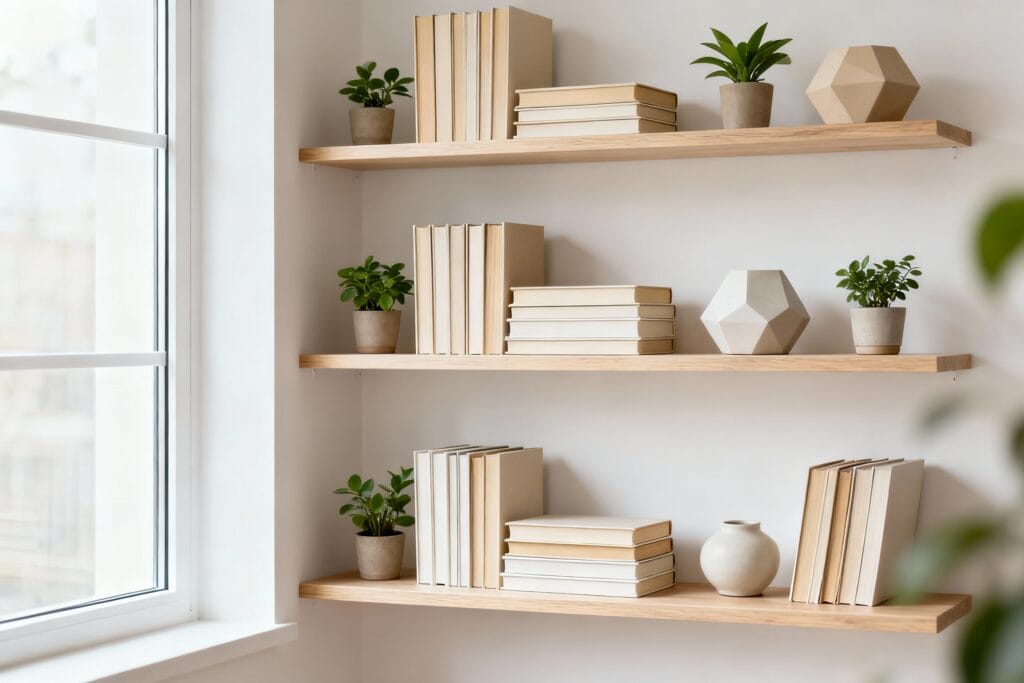
Open shelves can look curated and calm—or like a yard sale in a windstorm. The difference? Intention.
You don’t need a stylist’s budget or a museum’s discipline. You just need a plan, a few visual tricks, and the guts to edit ruthlessly. Ready to make your shelves look chic instead of chaotic?
Edit First, Style Second
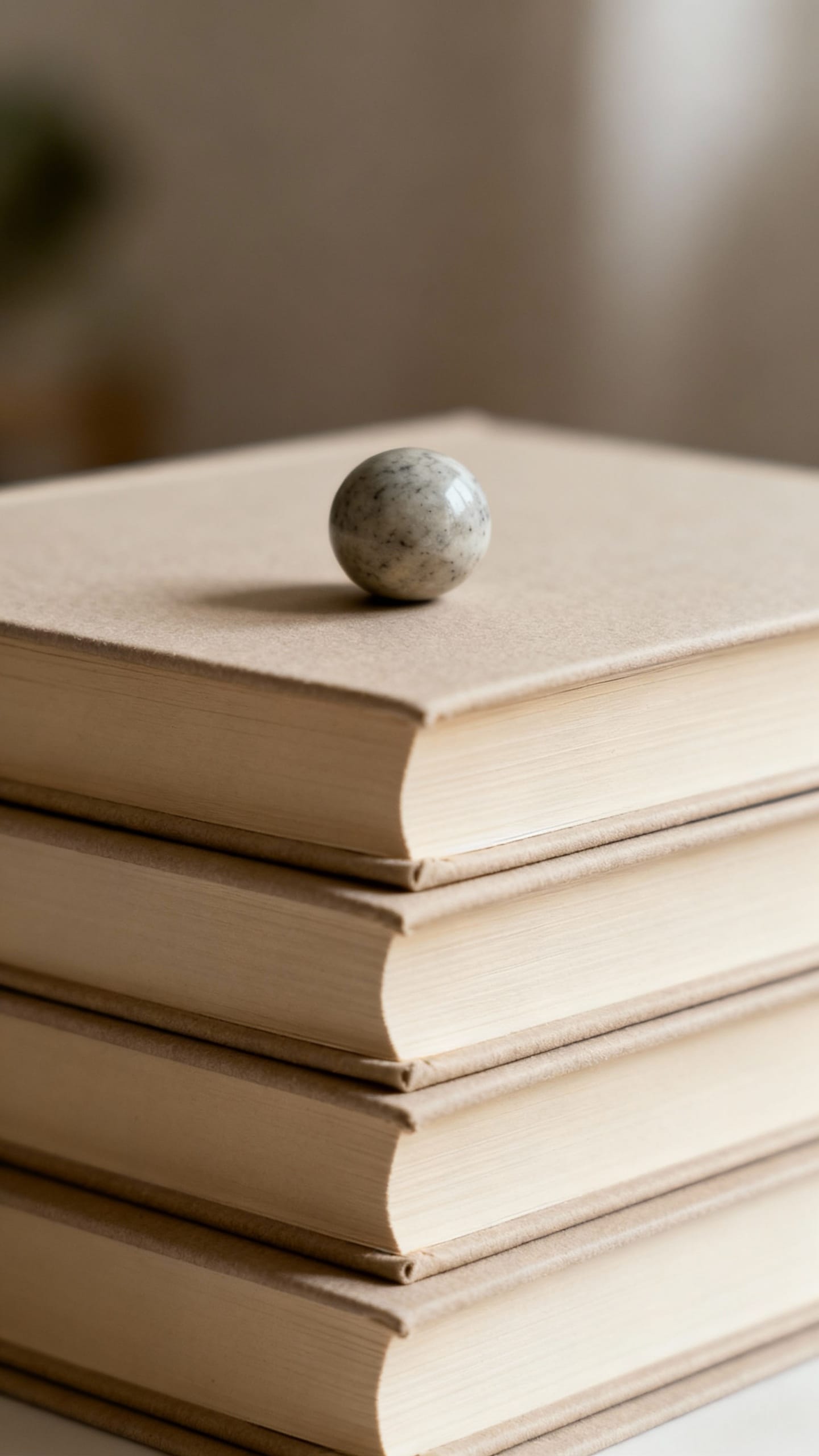
You can’t style clutter.
Pull everything off your shelves and sort it into three piles: love, like, and why-do-I-own-this. Keep “love,” try to work in a few “like,” and donate the rest. Brutal?
Yes. Worth it? Absolutely. Keep only what earns its spot. If you wouldn’t display it on your coffee table, it probably doesn’t belong on your shelves.
And no, your six identical souvenir mugs don’t all need a cameo.
Set a Clear Purpose
Decide what your shelves actually do. Books and records? Showcase ceramics?
Storage with some pretty moments? When you choose a purpose, you choose what stays in the spotlight. Everything else goes in closed storage—out of sight, out of mind, out of visual noise.
Choose a Cohesive Color Story
Color makes or breaks open shelves.
Pick a palette of 2-3 main tones plus one accent. Repeat those colors across objects to stitch the whole thing together visually.
- Neutrals first: Whites, blacks, woods, and glass calm the chaos.
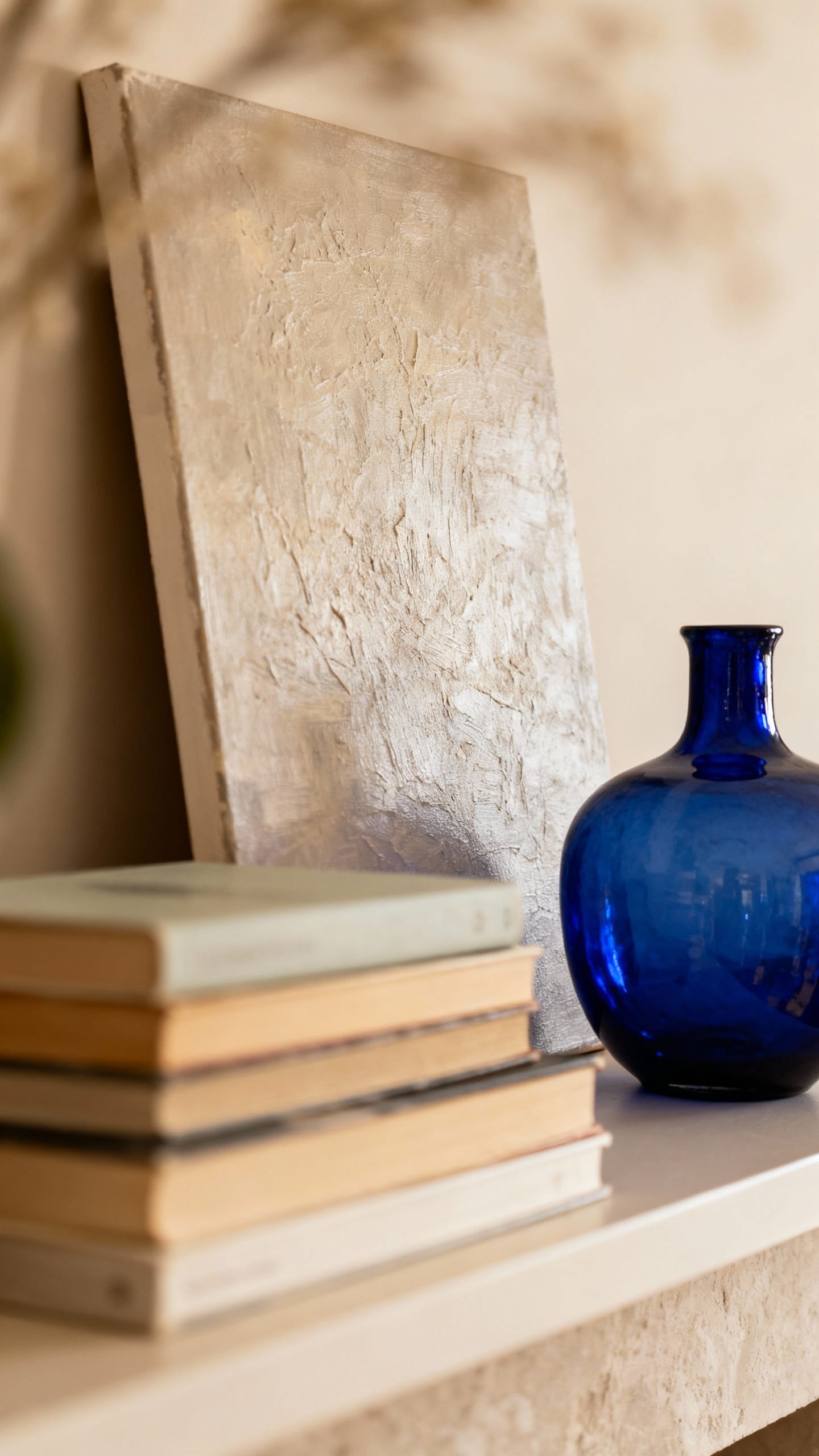
- Pop selectively: Use one bold color sparingly—think a cobalt vase or a cherry-red bowl.
- Group by tone: Keep your light items together and your darks together for rhythm.
FYI, if your items are more “rainbow” than “coordinated,” consider subtle decoys: matching baskets, white book jackets, or linen storage boxes that quiet the palette.
Work in Layers (But Keep It Light)
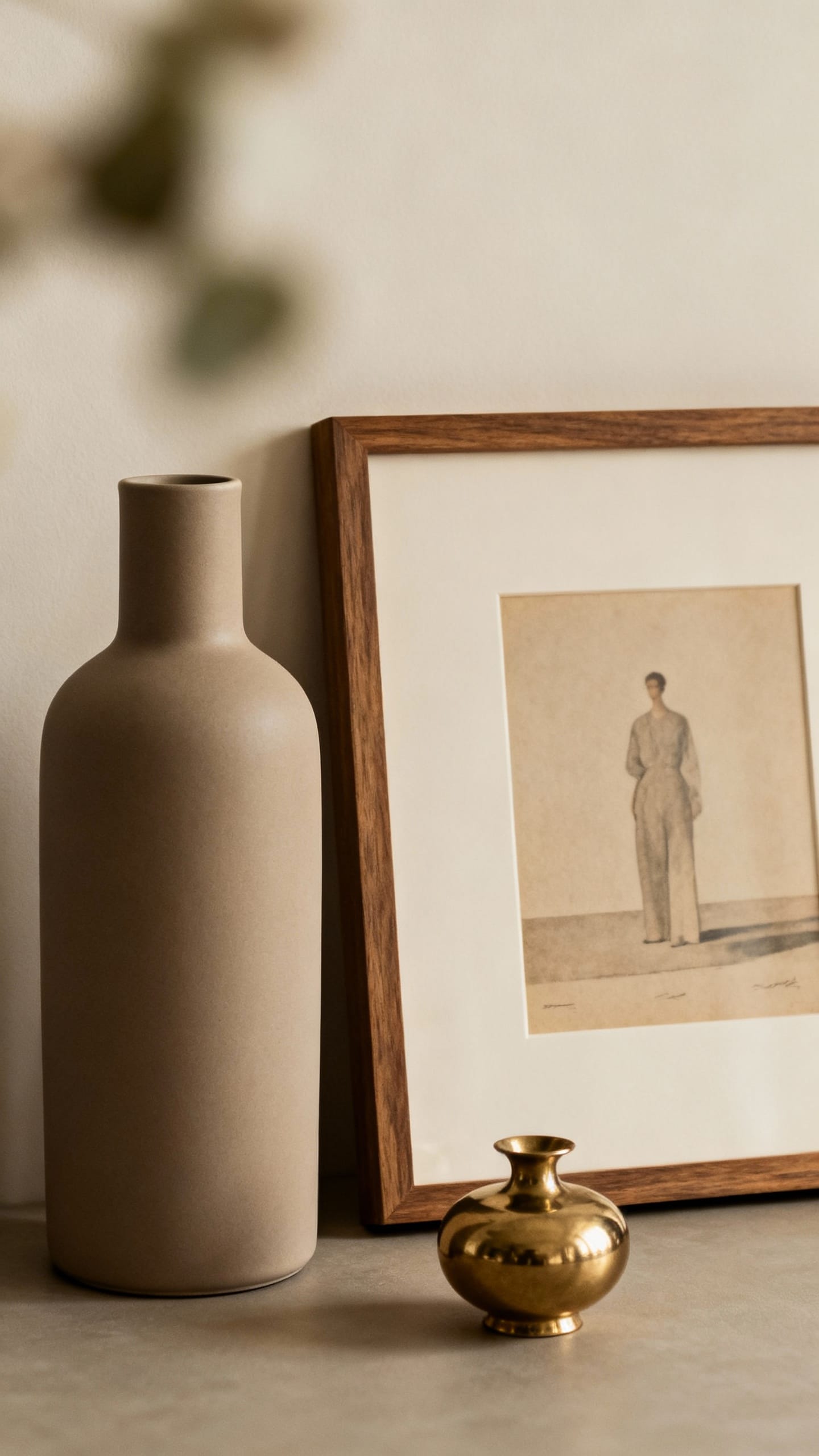
Layering adds depth, but too much screams clutter. Aim for three layers max: backdrop, mid-layer, and a front object.
Think: a framed print leaning against the back, a stack of books in front, and a small sculptural piece on top.
Use Visual Triangles
Triangle arrangements keep your eye moving without confusion. Place one taller piece, one medium, and one small item in a triangular composition. Repeat these “visual triangles” on each shelf, mirrored loosely left to right.
It looks intentional without looking stiff.
Leave Breathing Room
Your shelves need negative space. Aim for at least 20-30% empty space per shelf. If that sounds like a lot, good—that’s the point.
Space = calm.
Vary Heights, Shapes, and Textures
If everything stands the same height, your shelves feel flat. Mix it up.
- Heights: Tall vase, medium stack of books, small candle.
- Shapes: A round bowl next to a rectangular frame keeps things lively.
- Textures: Matte ceramics, glossy glass, woven baskets, raw wood—texture adds quiet drama.
IMO, a single organic shape (like a driftwood piece or a soft, round vase) instantly relaxes a shelf that feels too rigid.
Style Books Like a Pro
Books can look polished or piled-on. You choose.
- Mix orientations: Stand some vertically, lay some horizontally.
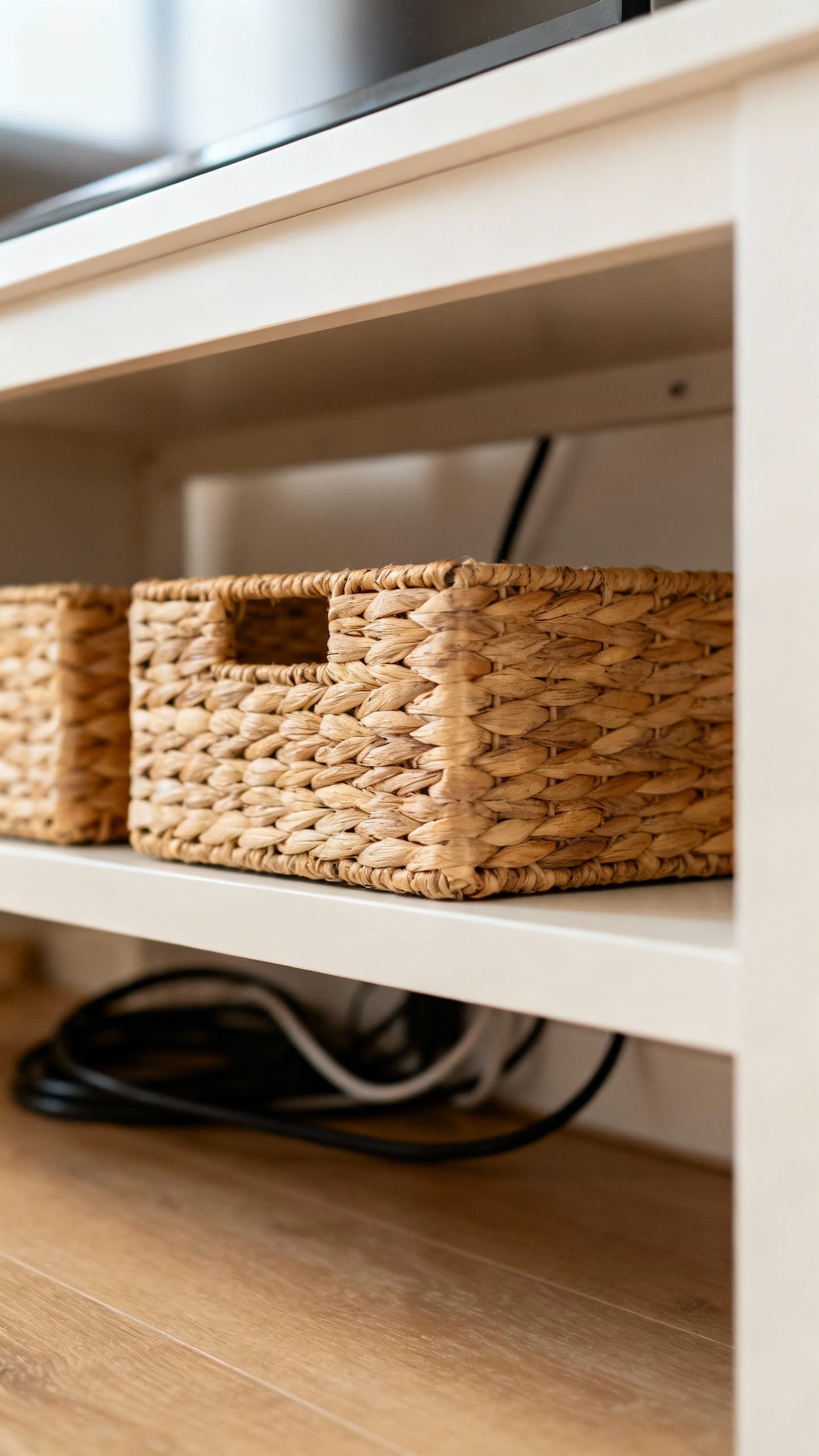
- Cap stacks: Top horizontal stacks with a small object—think a paperweight or bud vase.
- Color coordination: You can go rainbow, but for a cleaner look, group by color families or remove busy dust jackets.
- Even spacing: Keep an inch or two of air on each side for that bookstore-but-better vibe.
Contain the Chaos
Have ugly-but-necessary items?
Hide them. Use matching boxes or woven bins on lower shelves. Label them discreetly so you actually remember where you hid the charging cables and the mystery remote from 2012.
Repeat Elements With Intention
Repetition creates cohesion.
Choose a few elements and echo them across your shelves.
- Materials: Repeat brass accents or black frames three times for consistency.
- Motifs: A trio of ceramic pieces, spaced out, feels curated.
- Colors: If you use a bold color, repeat it at least twice more to make it feel anchored.
And please, don’t create twins. You want siblings—related, not identical.
Edit… Again
When you think you’re done, take a photo of your shelves. Photos show clutter your eyes ignore.
Remove one thing per shelf and see if it feels better. Nine times out of ten, it does.
Live With It and Tweak
Shelves aren’t permanent. Swap in seasonal items, rotate art, or trade a stack of books for a sculptural piece.
Keep the framework, play with the details.
Common Layout Recipes That Always Work
When in doubt, steal a formula and make it yours.
- The Balanced Bookend: Tall item on the left, stack of books in the middle, medium item on the right. Repeat inverted on the next shelf.
- The Gallery Lean: One framed piece leaning at the back, one medium vase off-center, small object in front. Add a book stack if needed.
- The Symmetry Light: Two similar-height items flanking a central stack.
Not twinning, just coordinating.
- The Texture Play: Woven bin, matte ceramic, glass piece. Different vibes, same palette.
Pro tip: Step back after each shelf. If your eye lands on one area and won’t move, redistribute the weight—usually by shifting a tall item or adding height somewhere else.
Lighting, Plants, and Personality
Shelves love a little glow.
Add a puck light, a tiny lamp, or LED strips to highlight texture and art. Good lighting hides a multitude of styling sins. Plants?
Yes, but sparingly. One trailing pothos or a small sculptural succulent gives life without turning your shelves into a greenhouse. And don’t forget personality: a travel memento, a quirky bookend, a weird thrift find.
One or two. Not twenty.
What to Skip
– Overly tiny knickknacks that read as visual static – Too many picture frames (choose your top 2-3) – A dozen scented candles that never get lit (pick your signature) FYI, clutter disguised as “collections” still counts as clutter if it overwhelms the space.
FAQs
How many items should I put on each shelf?
Aim for 3-7 items depending on shelf length and item size. Larger objects count as two.
If your shelf looks busy, remove one piece and add breathing room. The goal: balance, not maximalism-by-accident.
Can I style open shelves in a small space without it feeling crowded?
Yes—go lighter and airier. Use a tight color palette, more negative space, and fewer tall items.
Add closed boxes on lower shelves for the not-cute stuff. Small space doesn’t mean small style—just smart editing.
What’s the best way to mix books and decor?
Think 60/40: 60% books, 40% decorative pieces. Anchor each shelf with at least one stack or row of books, then add a sculptural object, a small plant, or a frame.
Layer sparingly so the books remain the star.
Should I display personal photos?
Absolutely, but curate. Choose 1-3 photos with matching frames or finishes. Place them in different zones (top, middle, bottom) so they feel integrated.
Skip the gallery explosion—your shelves aren’t a family reunion.
How do I keep shelves functional and pretty?
Hide the necessities in lidded boxes or woven bins, then style around them. Use baskets for cables, remotes, and random mail. Keep pretty items at eye level and storage-heavy items lower.
Function and form can be friends, promise.
What if I love color and have lots of keepsakes?
Group by color or theme and rotate them. Display a tight set now, store the rest, and swap seasonally. Repetition and restraint make bold collections feel intentional instead of chaotic.
IMO, rotation is the secret sauce.
Conclusion
Open shelves look amazing when you edit, simplify your color story, and repeat elements with intention. Mix heights, shapes, and textures, then leave breathing room so your favorites shine. Take a photo, remove one thing, and you’re golden.
Keep tweaking until it feels like you—pulled together, not overstuffed.
👉 For even more inspiration, explore our Home & Lifestyle category. Shop smart and stylish with partners like Shein, Temu, Aliexpress for both budget-friendly and premium décor.
EXPLORE MORE & SHINE DAILY
Discover self-care rituals, glow-enhancing routines, and beauty favorites in our BEAUTY section.
For cozy home inspiration, mindful routines, and soft everyday living, explore HOME & LIFESTYLE.
Find feminine outfits, effortless style ideas, and modern fashion inspiration in FASHION.
Love curated outfits and shoppable inspiration? Visit SHOP THE LOOK to recreate your favorite styles.
Looking for thoughtful ideas for every occasion? Browse our curated GIFT GUIDES.